Saturday, November 5, 2011

Lesson 6: Kneading Bread Dough

Working with your hands is fun. Working with dough is fun. It's like play-doh, but you get to eat it later. For most yeast recipes you will have to knead the dough either by hand or with the use of a machine. So what's the deal with kneading? Well it's basically just the time when a baker mushes the dough for his or her own pleasure. Just kidding. It is actually a very important step. Why? Thanks for asking. Kneading the dough is what helps our friend gluten (remember him from a while ago?).

When dough undergoes the process of kneading it activates the gluten. Kneading the dough is a process in which the gluten is repeatedly stretched and elongated (McGee, Harold. On Food and Cooking: The Science and Lore of the Kitchen. New York: Scribner, 2004).


Another purpose of kneading the dough is to aerate (or make air bubbles) in the bread. The process of stretching and folding captures air bubbles in the dough and creates "pockets". The more pockets that a dough has, the finer the texture will be.

Fun fact: the word knead comes from an Indo-European root meaning "to compress into a ball".

Here is a video that will demonstrate how to knead bread dough, enjoy!


* Source: McGee, Harold. On Food and Cooking: The Science and Lore of the Kitchen. New York: Scribner, 2004.

Portfolio # 8

Through the field of Psychology, we are taught that we influence the environment and that the environment influences us. The environment has an effect on us in its restorative value. According to the article "A Place Just Right: Effects of Place Attachment on Preference for Restorative Environment", restorative environments supply "the process of recovery that follows stress or fatigue, involving an enhancement of mood, a renewed capacity for directed attention, and possible self-reflection" (source).

In this particular study, researchers examined whether natural environments were useful for the restoration process of all individuals, no matter what living background they have been accustomed to. There are key defining elements in determining whether or not an environment is restorative and are as followed "A peaceful fascination (natural curiosity or interest without the necessity of suppressing distracting stimuli) that allows for personal reflection; a sense of being away (from one's normal setting, routine activities, and unwanted distractions); extent/ coherence (large enough scope to have a range of elements for the mind to explore and that exist as part of a larger whole that one can make sense of in terms of organization and structure); and compatibility (opportunities to meet and individual's preferences and purposes." (source)

The results of this study found that participants rated rural images the highest across all conditions, meaning that individuals with different backgrounds and living arrangements found environments with the most nature to be the most restorative. Researchers who conducted the study also took into effect the fact that some individuals just have a preference for more nature when it comes to a restorative environment.

Nevertheless, human beings have a drive to be a part of nature. We have a drive to be outdoors and soak up the fresh air and sunshine. It is healthy for human beings to take the time to enjoy the natural settings around us.


Portfolio # 7

Teaching has become one of my greatest passions. I love the feeling when you explain a concept to a student and that light bulb in their head finally goes off. The shear look of pride and competence on their face is worth more than the eight dollars an hour I get for the tutoring session. I honestly would do the job regardless if I were paid or not. Through countless hours of tutoring training, I have learned one key aspect to tutoring and essentially, to teaching and that is laughter. I believe that laughter is key to a successful tutoring session and that it overall aides the student's learning.

According to the article "How Laughing Leads to Learning" from the American Psychological Association, "a growing body of research suggests that, when used effectively, classroom comedy can improve student performance by reducing anxiety, boosting participation and increasing students' motivation to focus on the material" (source). Laughing, essentially is a great means to ameliorate the anxiety that some students have regarding subjects that they feel they are not as strong in. Also, interjecting lectures with jokes makes a lecture one in which students can relate to and thus recall easily.

There is an implication, however, when it comes to using laughter in the classroom. Jokes that are inappropriate and are interjected too often distract students from the actual message and may have a detrimental effect on the student's learning process. Experts state that the best way to combat this issue is to put learning first and add contextual jokes later instead of the opposite way.

I firmly believe that laughter is key to the success of a student. Laughing is healthy. It releases the "feel good" hormones, which can have dramatic effects on the mood of an individual. A student who has a positive outlook on a course may not have the debilitating anxiety other students may have, and thus do better in the course.

How Laughing Leads to Learning


Tuesday, November 1, 2011

C is For Cookie, That's Good Enough For Me


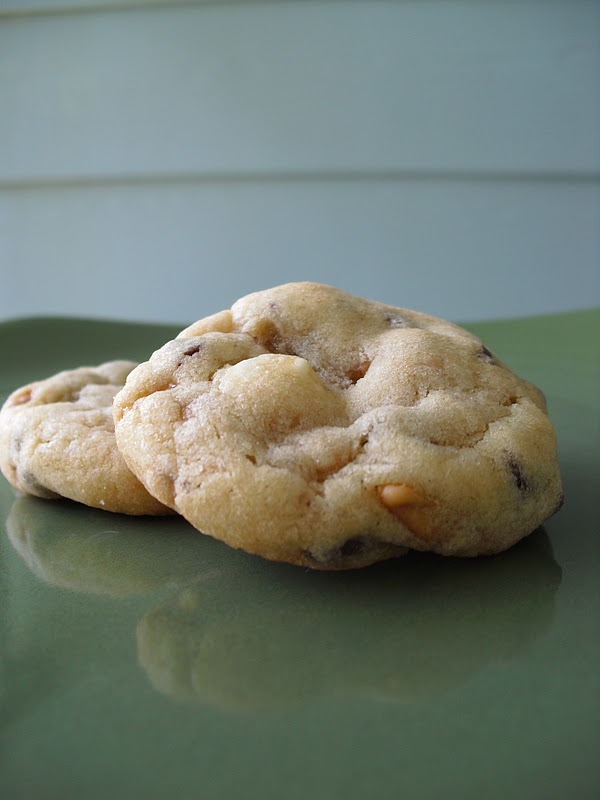
Kitchen Sink Cookies
(because they have everything but the kitchen sink!)


Ingredients:

1 cup butter, softened
2 cups packed brown sugar
2 eggs
2 tsp vanilla extract
2 1/3 cups all-purpose flour
1 tsp baking soda
1 tsp salt
2 cups rolled oats
1 cup semisweet chocolate chips
1 cup vanilla baking chips
1/2 cup butterscotch chips
1 cup chopped pecans

Directions:

1. Preheat oven to 375 degrees F

2. In a large bowl, cream together butter and brown sugar until smooth. Beat in the eggs one at a time, then stir in the vanilla. Combine the flour, baking soda and salt; stir into the creamed mixture. Mix in the oats, chocolate chips, vanilla chips, butterscotch chips and chopped pecans. Drop by tablespoons onto ungreased cookie sheets. Cookies should be at least 2 inches apart.

3. Bake for 8-10 minutes in preheated oven. Allow cookies to cool on baking sheet for 5 minutes before removing to a wire rack to cool completely.

Lesson 5: Cookie Monster

Cookies. We all know them. Those delicious, delicate, finger-lickin' good morsels. In French they are referred to as "petits fours" which means "little oven goods". (McGee, Harold. On Food and Cooking: The Science and Lore of the Kitchen. New York: Scribner, 2004).


Cookies are usually very sweet and rich. They are also very moist and soft, due to new techniques in baking that help prevent the formation of gluten (remember my spiel on gluten?). Cookies can be soft, chewy, crunchy, flaky, with slight changes of ingredients and changes in the method that the ingredients are combined.


Let's learn a little more about cookies...

1. Flour

  • For best results, use pastry or all-purpose flour
  • High proportion of flour-water makes shortbread and pastry dough cookies (this means they are dry)
  • High proportion of water-flour makes batter based cookies (can be soft or crunchy)
2. Sugar (yum)
  • When sugar is creamed with the fat (like butter or an egg) it creates air bubbles which makes the cookie light and airy. 
  • Sugar raises the starch gelation temperature, which makes the cookie crispy
  • A good proportion of sugar dissolves when mixed with liquid and then again during the baking process
3. Eggs

  • Provide the bulk of water in a cookie mix
  • Provides the protein that is necessary to bind the flour particles together
  • The more eggs or egg yolk in a cookie recipe, the more "cake like" your cookies will turn out (this is because the fat in eggs make baked goods moist)
4. Fat
  • Fat, like butter, margarine, or shortening, provides the moistness and suppleness 
  • When the fat melts, it assists the spreading out of the cookie by lubricating flour particles, hence you have a flat disk shaped cookie instead of a ball of dough
  • Butter melts at a lower temperature, so it gives more time for the protein and starch to set in
5. Leavening
  • Leavening agents are used to tenderize cookies and make them "puff" when carbon dioxide is released
  • Some cookies only undergo the leavening process when the sugar is creamed with butter
  • Other cookie recipes use alkaline baking soda, especially when the dough has an acidic content due to honey, brown sugar, and cake flour

* Source: McGee, Harold. On Food and Cooking: The Science and Lore of the Kitchen. New York: Scribner, 2004.

Portfolio # 6

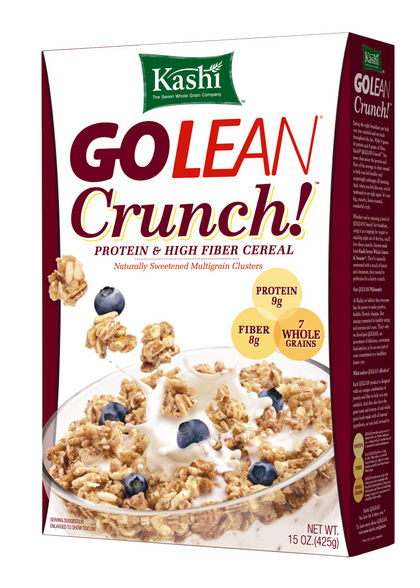
Corporate social responsibility, to me, is when a corporation acknowledges the power that they have and use that power to better the world in a fashion that is relevant to what they stand for. A corporation that I truly value is "Kashi". "Kashi" is an organic food company that is dedicated to educating people to make the right choices in food so that their body can meet its full potential. "Kashi" is also dedicated to the green movement and is a big proprietor for conserving energy and resources with programs that promote recycling, etc.


I recently read an article about how children who are exposed to media sources regarding unhealthy food choices tend to be overweight. The battle of childhood obesity seems to get harder and harder to fight with each passing year. While I do not have a particular company in mind, because there are so many out there that are guilty of such crimes, I do believe that there should be some sort of regulation. One of the most despicable food items that are just oh so popular are Lunchables, produced by Kraft Foods.


Foods like "Lunchables" are not nutritious, are calorie dense, and are loaded with unhealthy fats. Yet, parents still purchase these lunches for their child. One popular type of "Lunchables" is the Nachos variety.

 Here are the nutrition facts on these Nachos:


Extremely high fat content and even higher sodium content. The media should have some sort of regulation when it comes to foods that are so unhealthy to be idolized and valued by the children in our society.


Portfolio # 5

By now I am sure that you have guessed that one of my favorite activities is baking. I know, it is a total shocker. Nevertheless, I am a baker. Baking is one of my favorite past times and will be the focus for this assignment. Now the goal of this assignment is to research a law or a regulation that pertains to a certain recreational activity that we are interested in. Once again, I have found another article with some great information...on baking laws.

The Cottage Food legislation was signed into law in 2011 in the state of Florida. This law allows for commonly baked goods (breads, pies, cakes, cookies, etc) to be sold without having a food license from the Federal Department of Agriculture and Consumer Services. The manufacturer of cottage foods is limited to the gross product of $15,000 per year and is prohibited from using the internet, mail orders, consignment, or wholesale as a means to selling their goods.

The foods that are approved to be sold in this fashion are claimed to be less hazardous. Such foods include:


I think that this law that has been set is very fair and reasonable. It allows for small scale bakers to still make some form of income off of their  baked goods, while ensuring the public's safety.  A good deal of science is necessary for this law to be put into effect because of health effects that it can have. There is a need for science to understand the basic principles of contamination and examining which foods that have more potential to become contaminated and possibly hurt an individual.